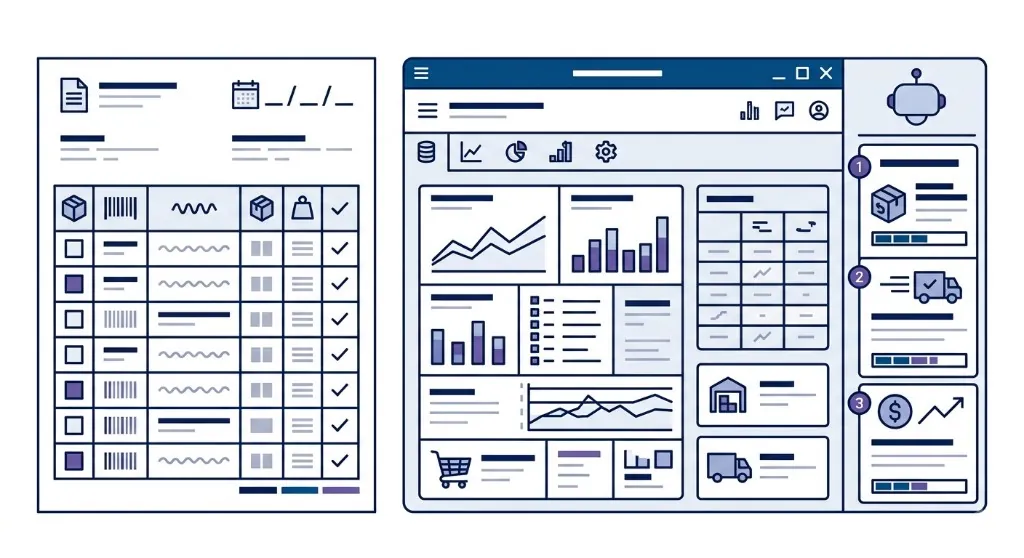
Operations & back office
Order intake, document chasing, status updates, and hand-offs between email, Excel, and your ERP.
Not another chatbot
Most “AI” in business is a chat window that cannot touch your ERP, email, or files. An agent is different: it has a goal, tools, memory, and rules. It can draft, look up, update, and escalate, then stop and ask a human when the stakes are high.
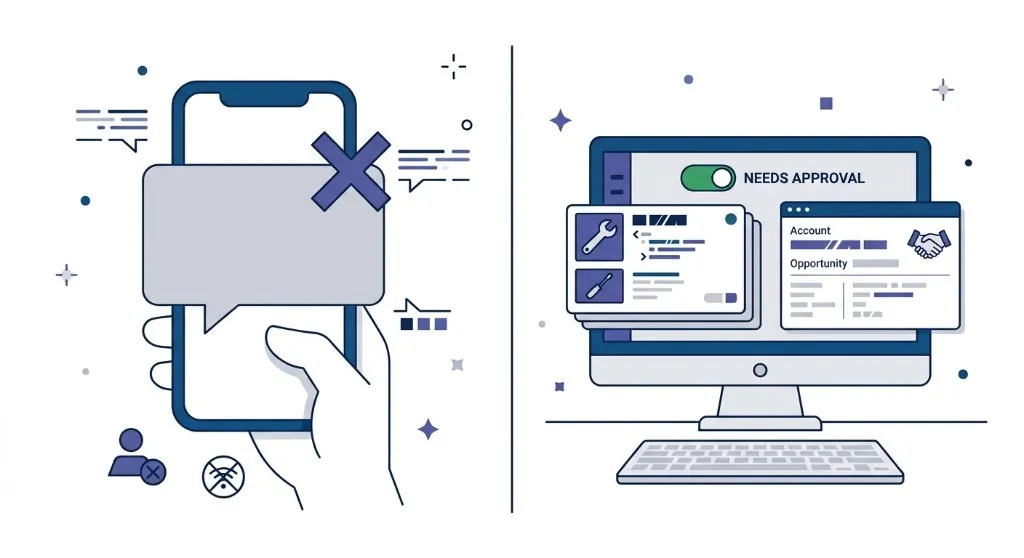
Where agents pay off
We start from one painful, repetitive workflow, not a science project. Typical first agents in Luxembourg SMEs:
Order intake, document chasing, status updates, and hand-offs between email, Excel, and your ERP.
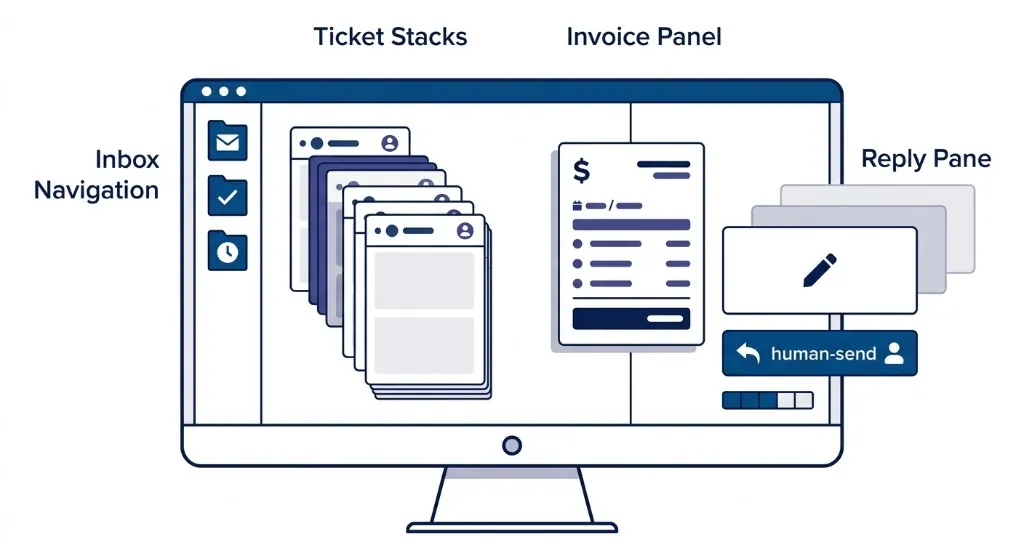
Triage incoming requests, pull the right account context, draft replies, and escalate the exceptions.
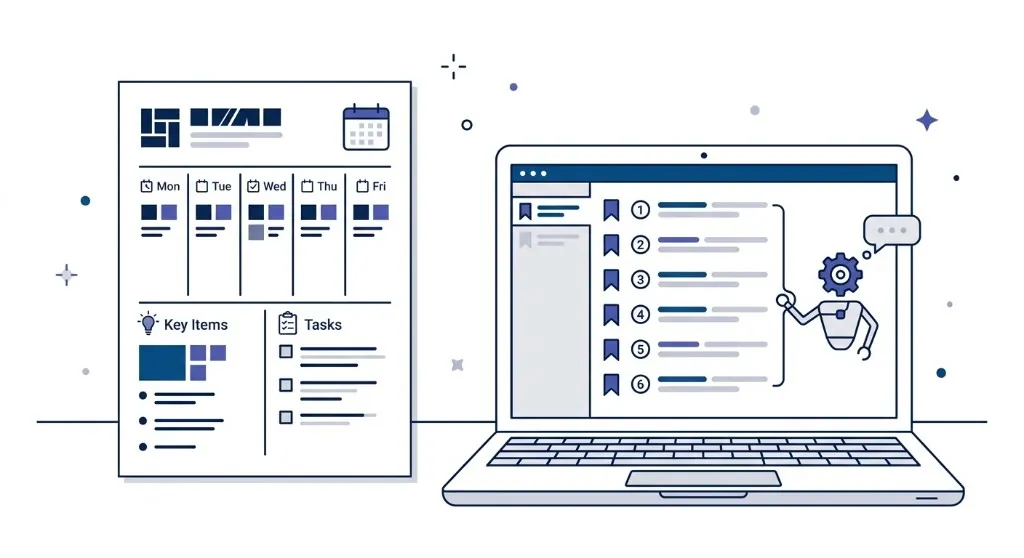
Collect sources, summarise changes, and produce a weekly brief your team can actually use.
A specialist assistant for finance, HR, or project delivery that knows your policies and templates.
How it works
Every agent we ship is a system, not a prompt. Triggers start a run. The runtime chooses tools. Memory supplies context. Guardrails stop unsafe actions. You see what happened.
Trigger
Agent runtime
Tools
Memory (RAG)
Guardrails & human approval
EU hosting
Stack
We pick the model and tooling for the job, not a one-vendor demo. Your data stays in systems you control, hosted in Europe.
How we deliver
A short, honest path. If an agent is the wrong tool, we will say so on the first call.
Week 0
15 minutes. We pick one workflow, the systems it touches, and whether an agent (versus simpler automation) is worth building.
Week 1
We shadow the process, list tools and failure cases, and define success in numbers you already track.
Weeks 2–3
A working loop on a narrow slice: observe → act → verify. You can click through real runs, not slides.
Weeks 3–5
APIs, MCP, email, ERP, files. Least-privilege access. Logs for every tool call.
Week 5
Approvals, rate limits, eval sets, and a clear “what the agent must never do” list.
Ongoing
EU hosting, monitoring, and a Luxembourg contact who can change the agent when your process changes.
No deck. We look at one painful workflow and tell you whether an agent is the right move, or whether a simpler automation will do.
Pick a time that works for you. We'll talk through your project and see how NexClass can help.
FAQ
Software that can pursue a goal across multiple steps: it reads context, chooses tools (email, ERP, APIs), acts, and checks the result. Unlike a chatbot, it is allowed to change something in your systems, within the rules you set.
Consumer chat tools answer questions in a box. Our agents are integrated into your stack, have permissioned tools, keep an audit trail, and can be required to get human approval before sending, paying, or updating records.
No. We use retrieval (RAG) and your existing systems so the agent can look things up. We do not send your data into a public training set. Hosting and vendors are chosen so data can stay in the EU.
Yes. We design for data minimisation, access control, logging, and EU hosting. A Luxembourg-based team remains the accountable contact for how the agent is built and run.
A discovery call is 15 minutes. A first prototype on one workflow is typically a few weeks, not a six-month lab project. We would rather ship a narrow agent that runs than a broad demo that does not.
Book a discovery call. Bring one repetitive process (for example: “every order confirmation still needs a human to copy data into the ERP”). We will tell you if an agent is justified.