Erp
Specialised ERP module: extend your ERP instead of replacing it
Instead of replacing your ERP, a specialised module can fix the one process that costs you time: cheaper, faster, and without a full migration.
Read more →Decision guide
Every AI conversation we have with a Luxembourg company reaches the same question by minute ten: “but is this GDPR-compliant?” The honest answer is that GDPR does not care whether a model runs in Frankfurt, in Virginia, or on a server in your basement. It cares about which personal data you process, why, on what legal basis, and who else can see it. Where the model runs is one input to that answer, an important one, but not the whole answer.
The most common misconception we meet: that self-hosting an open-weight model makes you compliant. It does not. A local model that ingests your HR files without a legal basis, without a retention limit, and without a log of who queried what is still a GDPR problem; it just happens to run on your own hardware.
What self-hosting genuinely removes is one specific risk: the transfer question. No third-party processor, no international transfer analysis, no dependence on a vendor’s retention policy. That is real value, and it is one line item out of six.
These apply to all three deployment options. If you cannot answer them, the hosting question is premature:
The EU AI Act sits on top of this. Most SME use cases fall under transparency obligations, but recruitment screening, creditworthiness scoring, and worker management are explicitly high-risk; if your idea is in that territory, check the classification before you build.
Public API. The strongest models, no infrastructure, fastest path to something working. Business tiers generally exclude your inputs from training and offer DPAs and EU residency options; the consumer tier of the same product usually does not. Best for non-sensitive content where you control what goes in.
EU-hosted inference. Open-weight or European models served from an EU provider under an EU contract. Someone else runs the GPUs and the transfer question gets simple. Below frontier capability, but more than enough for classification, extraction, and routing. Best for ordinary business data.
Local / self-hosted. An open-weight model on a GPU server you control. Nothing leaves your perimeter, and you own the whole stack, including patching, monitoring, and capacity. Best for confidential documents, health or HR data, and high-volume repetitive tasks where a fixed monthly cost beats per-token pricing.
Self-host when:
We talk clients out of it more often than into it, though. For long multi-step reasoning and reliable tool use, hosted frontier models still lead, and a failing agent costs more than the tokens you saved. You inherit GPU capacity, uptime, and security patching, which rarely appears in the original business case. A GPU server bills whether you send it ten requests a day or ten thousand. And if the workflow touches no personal or confidential data, self-hosting buys you complexity, not compliance.
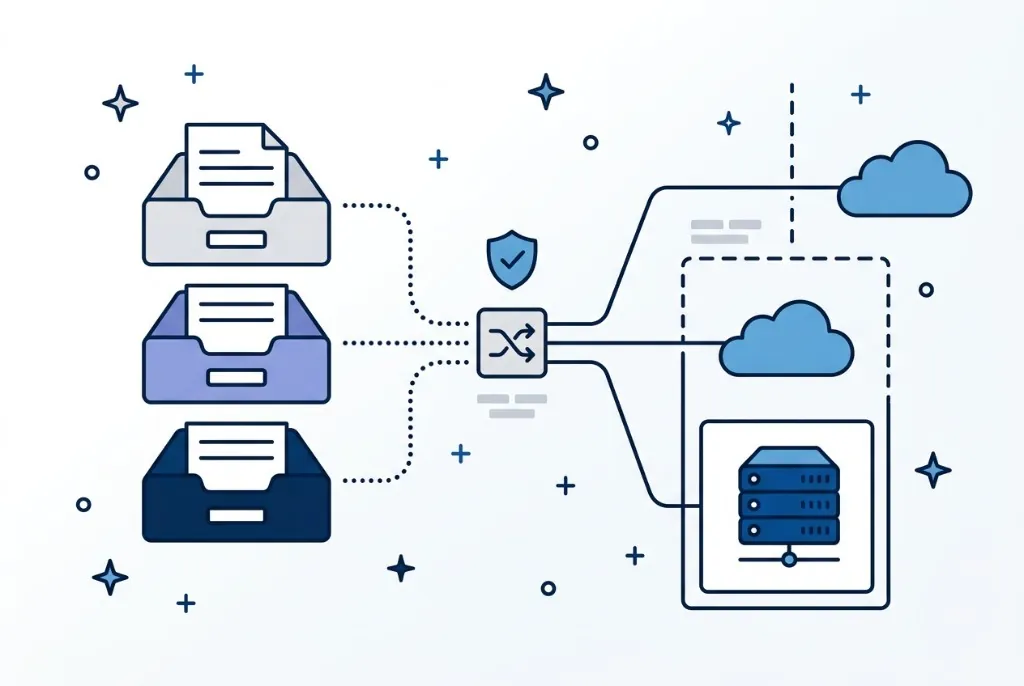
It is not one model for the whole company. Classify the data first, then send each class where it belongs:
Four things around that routing matter more than the model choice itself: redaction at the boundary so identifiers never reach the model unless needed; retrieval (RAG) so the agent looks facts up in your systems instead of relying on what a model memorised; least-privilege tool access so an agent that reads invoices cannot delete them; and an audit log of every tool call. Add human approval on anything that writes, sends, or pays. It is the cheapest control available, and what makes an AI agent safe to put in front of a real process.
We start from the workflow and the data, not from a model vendor: hosted frontier models where they earn their place, EU-hosted inference for ordinary business data, local models where the data should not leave the building, often all three in one system. Retrieval, least-privilege access, audit logs, and human approval on write actions are standard, not extras. We also say when an agent is the wrong tool: a large share of what arrives as “an AI problem” is a straightforward automation problem , deterministic, cheaper, and easier to defend to your auditor.
One note on scope: this is engineering guidance, not legal advice. For a formal assessment, work with your DPO or a Luxembourg data protection lawyer: the CNPD also publishes practical guidance for companies here.
Bring one workflow and the data it touches. In a short call we can usually tell you whether it needs a local model, an EU-hosted one, or no AI at all.
Contact NexClassInstead of replacing your ERP, a specialised module can fix the one process that costs you time: cheaper, faster, and without a full migration.
Read more →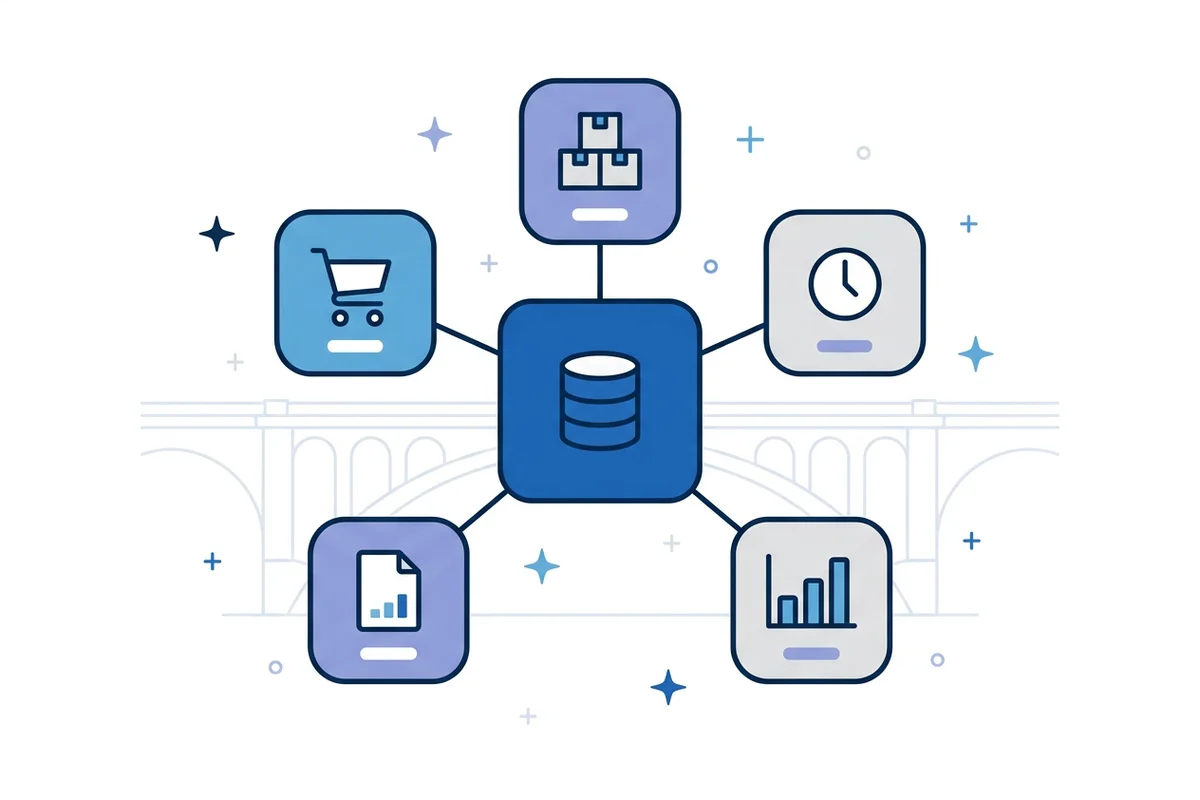
What an ERP system does, what is specific about working in Luxembourg, how standard, custom and extended ERP compare, and what a first module costs.
Read more →
Most SMEs do not need a full ERP. When Excel is the real system, when a package wins, and when a focused custom tool is cheaper and safer.
Read more →